




How a Dual Fuel System Works in BC: 2026 Guide for Metro Vancouver Homes
How a heat pump and gas furnace work together, when it makes sense, and what you save.
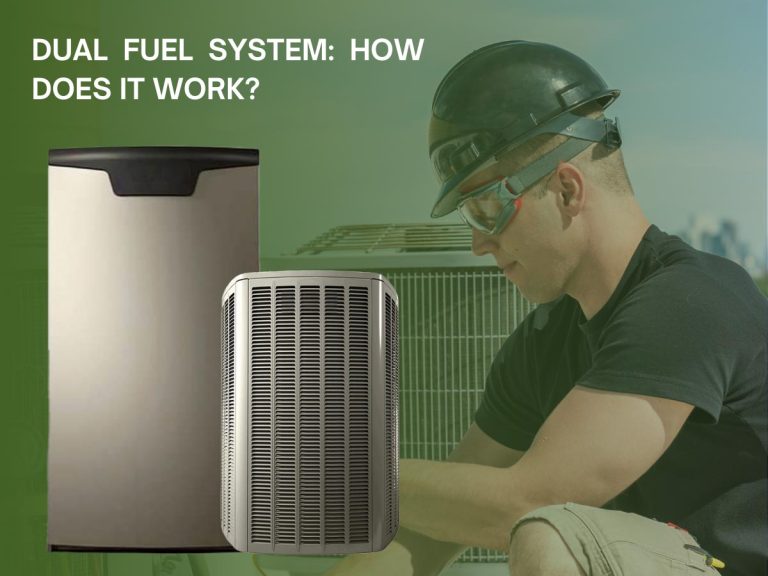
A dual fuel system pairs an electric heat pump with a gas furnace. The heat pump handles most heating and all cooling. The furnace runs only during the coldest days as backup. For Metro Vancouver homes with existing gas service and ductwork, this setup delivers the efficiency of a heat pump with the cold weather reliability of a gas furnace, and qualifies for a $5,000 rebate on installations completed on or after May 1, 2025.
This guide covers how the two systems work together, when a dual fuel system makes more sense than a standalone heat pump or furnace, what 2026 BC rebates apply, and what Metro Vancouver homeowners should know before installing one.
Deciding between three options? For a side-by-side comparison including furnace-only, heat pump-only, and dual fuel 2026 pricing, operating costs, and rebate math, see our furnace vs heat pump in BC comparison.
What Is a Dual Fuel System?
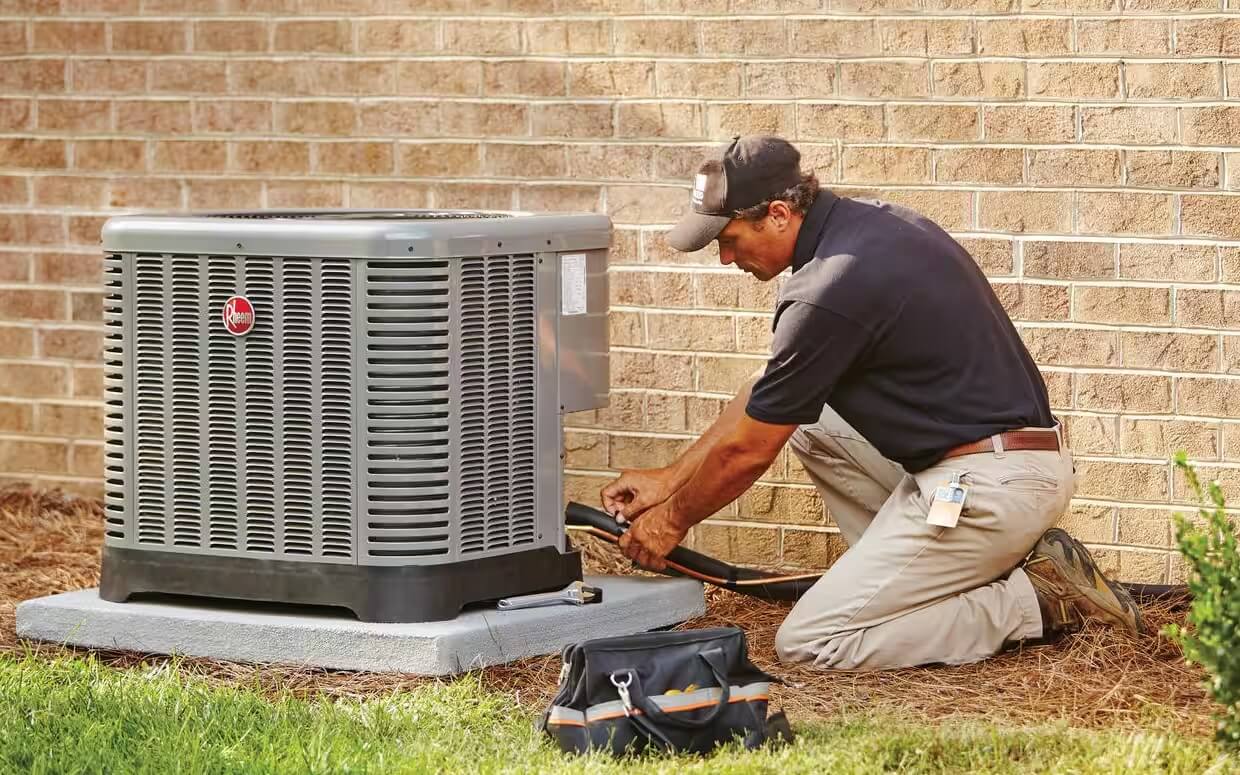
A dual fuel system is a heating and cooling setup that uses two energy sources. An electric heat pump handles heating most of the year plus all air conditioning, and a gas furnace acts as backup heating during the coldest days of winter. A single thermostat switches between the two systems automatically based on outdoor temperature.
In Metro Vancouver’s climate, the heat pump does roughly 85 to 95 percent of the annual heating work. The furnace runs only on the handful of days each year when outdoor temperatures drop below the heat pump’s efficient operating range. That split is what makes the system efficient.
How a Dual Fuel System Works
Here is how the two systems work together across a Metro Vancouver year.
Spring and Fall (mild temperatures)
The heat pump handles all heating and cooling. At mild outdoor temperatures, heat pumps operate at 3 to 4 times the efficiency of a gas furnace, which means your heating costs are at their lowest during these months.
Typical BC Winter (around 0°C)
The heat pump continues handling all heating. Modern cold-climate heat pumps maintain efficiencies of 2 to 3 times a gas furnace at 0°C, and Metro Vancouver averages a January low of roughly 1°C, so the heat pump is the primary system for most of winter.
Cold Snaps (below -10°C)
The thermostat switches to the gas furnace when outdoor temperatures fall below the switchover point, typically set between -10°C and -15°C on modern systems. The furnace delivers full heating capacity regardless of outdoor temperature.
Summer (warm weather)
The heat pump runs in reverse as a high-efficiency air conditioner. No gas is used in summer at all, which is a key advantage over furnace-plus-AC setups where two separate systems sit unused for half the year each.
Automatic Switching
A communicating thermostat monitors outdoor temperature, indoor demand, and the efficiency crossover between electricity and gas rates. The switchover happens without any homeowner input. Most homeowners never notice the switch is happening.
Shared Ductwork
Both systems use your existing ductwork. No separate distribution system is needed, which is why retrofitting an existing Metro Vancouver home with a dual fuel setup is straightforward when the ductwork is in good shape.
Why Metro Vancouver Homeowners Choose Dual Fuel
The six reasons homeowners most often pick a dual fuel system over a standalone heat pump or furnace.
Cold weather reliability
When an arctic outflow drops temperatures well below zero, the gas furnace takes over without any drop in heating output. Homeowners who lived through recent BC cold snaps value the guaranteed backup.
Energy efficiency
The heat pump does the bulk of the work at 2 to 4 times the efficiency of gas. Because BC Hydro rates are among the lowest in Canada, that efficiency translates directly into lower winter bills.
Air conditioning included
The heat pump doubles as an efficient air conditioner in summer. Vancouver’s summers keep getting hotter, and dual fuel gives you cooling without a separate AC unit.
Lower electrical panel upgrade risk
Because the gas furnace handles the highest-demand days, the heat pump does not need to be sized for the coldest possible temperature. This often means a smaller heat pump and less strain on your electrical panel, avoiding the $2,000 to $4,500 panel upgrade some standalone heat pumps require.
Shared workload, longer system life
Each component runs fewer hours per year than it would if working alone. Less wear translates to fewer repairs and longer service life from both the heat pump and the furnace.
$5,000 BC rebate eligibility
Qualifying dual fuel installations completed on or after May 1, 2025 are eligible for a $5,000 rebate. Income-qualified households may access up to $16,000 through the CleanBC income-qualified program (maximum tier, not available to all applicants).
When a Dual Fuel System Makes More Sense Than the Alternatives
Dual fuel is not always the right answer. Here is how the three main options compare for Metro Vancouver homes.
Pick a dual fuel system if
You live at higher elevation, in the Fraser Valley, or in a Tri-Cities microzone that gets colder than downtown Vancouver. Your existing ductwork and gas line are in good shape. You want guaranteed cold-weather reliability. You want to preserve gas service for cooking or hot water.
Pick a standalone heat pump if
You live in coastal Metro Vancouver where winter lows rarely fall below -5°C. You want to eliminate the gas bill entirely. You are building new or doing a deep renovation. Your electrical panel can support a larger heat pump without a costly upgrade.
Pick a standalone furnace if
Your existing furnace is less than 5 years old. Your upfront budget is tight and rebates do not close the gap. Your electrical panel cannot accommodate a heat pump. You do not need air conditioning.
For a full side-by-side breakdown with 2026 upfront costs, operating costs, and 10-year total cost of ownership, see our furnace vs heat pump in BC comparison.
2026 Dual Fuel System Costs and BC Rebates
Here is what Metro Vancouver homeowners should expect for a typical dual fuel installation in 2026.
Installed cost range
$10,000 to $15,000
Typical total installed cost for a dual fuel system on a Metro Vancouver single-family home with existing ductwork. Varies based on home size, equipment brand, and any required upgrades.
Standard dual fuel rebate
$5,000
Available on qualifying dual fuel installations completed on or after May 1, 2025. Reduces net installed cost for most Metro Vancouver homeowners.
Income-qualified maximum
Up to $16,000
Through the CleanBC income-qualified program on qualifying dual fuel installations (maximum tier, not available to all applicants). Vanheat Services checks eligibility before you commit.
Annual savings range
$200 to $350
Typical annual heating cost savings for a BC home switching from a gas furnace to a dual fuel system (BC Hydro 2026 data). Varies based on home size, insulation, and thermostat habits.
Important: The standard CleanBC fuel-switching rebate ended April 11, 2025. The figures above reflect post-May 2025 program rules. For a full breakdown of every BC program and what your household qualifies for, see our BC HVAC rebates page.
Components of a Dual Fuel System
Every dual fuel installation includes these components. Sizing each one correctly is the difference between a system that performs for 15 years and one that struggles.
Outdoor heat pump unit
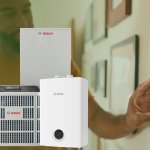
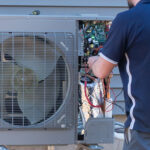
Extracts heat from outdoor air in winter and rejects heat from your home in summer. Sized based on heat load, not just square footage. Major brands include Mitsubishi, Daikin, Carrier, Trane, Bosch, and Lennox.
High-efficiency gas furnace
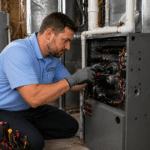
A 95 percent or higher AFUE furnace provides backup heating during cold snaps. In a dual fuel configuration, the furnace also acts as the air handler that moves heat pump air through your ducts.
Communicating thermostat
Manages the switchover between heat pump and furnace based on outdoor temperature and system demand. Programmable by Vanheat Services at installation to match your electrical and gas rates.
Refrigerant lines
Connect the outdoor heat pump to the indoor coil above the furnace. Properly sized and sealed refrigerant lines are critical for heat pump efficiency over the system’s life.
Indoor coil
Sits above or alongside the furnace. The heat pump transfers heat through this coil into your ductwork. Cleaning and maintaining this component is part of annual service.
Existing ductwork
Your home’s existing ducts distribute air from both the heat pump and the furnace. Undersized or leaky ducts undermine system performance. Vanheat Services inspects ductwork as part of every dual fuel assessment.
Honest Tradeoffs of a Dual Fuel System
Dual fuel is not the right answer for every home. Here are the situations where it is worth thinking twice.
Higher upfront cost than a single system
You are installing two pieces of equipment instead of one, so installed cost runs higher than either a furnace-only or heat pump-only setup. The $5,000 rebate closes most but not all of this gap for most homeowners.
More components to maintain
Two systems means more parts to service. Annual maintenance is still a single appointment, but you are servicing both a heat pump and a furnace. Budget for an annual tune-up of each.
Keeps you on the gas grid
If your goal is to eliminate fossil fuels entirely, a dual fuel system does not get you there. A standalone cold-climate heat pump is the right choice for homeowners planning to go fully electric.
Mild microzones may not need the backup
If your Metro Vancouver home rarely sees temperatures below -5°C, the gas furnace in a dual fuel system may run only a handful of hours per year. For those homes, a standalone cold-climate heat pump delivers nearly the same reliability at lower total cost.
Why Metro Vancouver Homeowners Choose Vanheat Services for Dual Fuel Installations
A dual fuel system is more complex than a single-system install. These are the reasons homeowners trust Vanheat Services to get it right the first time.
Red Seal Certified
Every technician holds Red Seal certification in gas fitting and refrigeration. Dual fuel installs require both trades, and we cover both in-house.
FortisBC Trade Ally
Certified FortisBC Trade Ally Network member. Our installations qualify for rebates from day one, and we guide you through the rebate application process.
10-Year Warranty
10 years on parts. 10 years on labour. Applies to both the heat pump and the gas furnace in every dual fuel installation.
4.9 Stars, 231 Reviews
One of the highest-rated HVAC contractors in Metro Vancouver. Serving homeowners across the Lower Mainland since 2008.
Dual Fuel System Frequently Asked Questions
Common questions Metro Vancouver homeowners ask before booking a dual fuel installation.
Is a dual fuel system worth it in BC?
For most Metro Vancouver homes with existing gas service, a dual fuel system offers the strongest balance of efficiency and cold weather reliability. The heat pump handles heating through mild BC winters at 2 to 4 times the efficiency of a gas furnace, while the furnace provides backup during the coldest days. Qualifying installations completed on or after May 1, 2025 are eligible for a $5,000 rebate.
At what temperature does a dual fuel system switch from heat pump to furnace?
Modern cold-climate heat pumps in dual fuel systems typically switch to the gas furnace between -10°C and -15°C, not the older 4°C threshold that applied to first-generation heat pumps. The exact switchover temperature is set during installation based on your home, equipment, and BC Hydro and FortisBC rates at the time of install.
Is a dual fuel system better than a standalone heat pump for Vancouver?
For most Metro Vancouver homes, a standalone cold-climate heat pump is sufficient because local winters rarely drop below -5°C. A dual fuel system is the better choice for homes at higher elevation, homes in colder microzones such as the Fraser Valley and parts of the Tri-Cities, or homeowners who want maximum cold weather reliability. For a full side-by-side comparison, see our furnace vs heat pump in BC guide.
Can I install a dual fuel system in an existing home?
Yes. Most Metro Vancouver homes with an existing gas furnace and ductwork can be retrofitted to a dual fuel system by adding a heat pump alongside the existing or replacement furnace. Vanheat Services assesses your ductwork, electrical panel, and heat load before recommending the correct equipment pairing.
What BC rebates are available for dual fuel systems in 2026?
The standard CleanBC fuel-switching rebate ended April 11, 2025. For dual fuel installations completed on or after May 1, 2025, a $5,000 rebate is available on qualifying systems. Income-qualified households may access up to $16,000 through the CleanBC income-qualified program on qualifying dual fuel installations (maximum tier, not available to all applicants). See our BC HVAC rebates page for current program details.
How long does a dual fuel system last?
Because the heat pump and furnace share the heating workload, both components see less wear than they would running solo. A properly installed and maintained dual fuel system typically lasts 15 to 20 years, with the heat pump and furnace sometimes reaching the end of their service lives at different times.
Related Heating Services and Guides
Continue exploring your options across Metro Vancouver and the Lower Mainland.
Furnace vs Heat Pump in BC
Full 2026 comparison of furnace, heat pump, and dual fuel options. Upfront costs, operating costs, rebate math, and 10-year ownership.
Read comparison →
Heat Pump Installation Vancouver
Full-service heat pump installation across Metro Vancouver. Mini splits, central ducted, and cold climate systems from all major brands.
View service →
Furnace Installation Vancouver
New high-efficiency furnace installation across Metro Vancouver. Trane, Bosch, Carrier, and Lennox authorized installer.
View service →
BC HVAC Rebates Guide
Complete guide to 2026 FortisBC, BC Hydro, and CleanBC rebate programs. Check what your household qualifies for before you buy.
View guide →
Ready to Explore a Dual Fuel System for Your Home?
Vanheat Services provides free in-home assessments across Metro Vancouver. We check your home size, ductwork, electrical panel, and rebate eligibility before recommending whether a dual fuel system, standalone heat pump, or standalone furnace is the right fit. Red Seal certified, FortisBC Trade Ally, 10-year parts and labour warranty on every installation.
Upfront Pricing
Red Seal Certified
4.9 Stars, 231 Reviews