




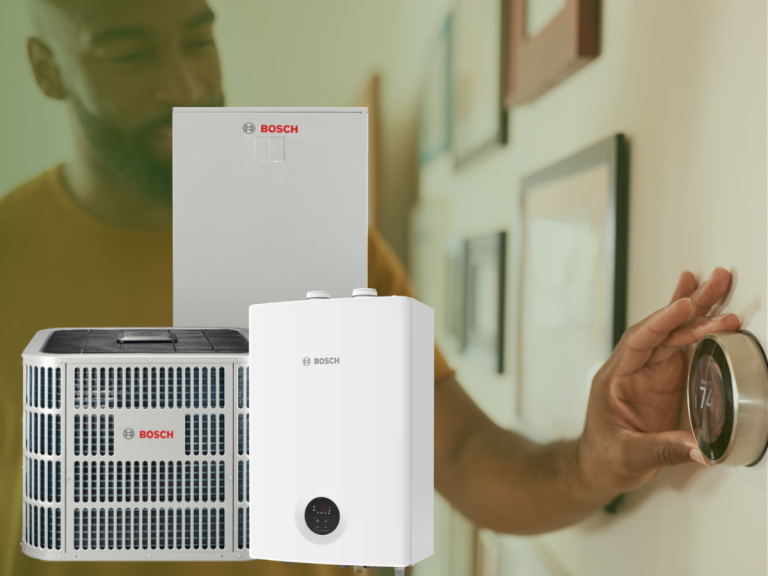
Bosch Heat Pump Fault Codes and HVAC Troubleshooting Guide
Bosch heat pump fault codes point to a specific category of problem, most often a communication error, a refrigerant pressure fault, or a sensor failure. This guide explains what those codes mean, how Bosch furnaces, IDS Premium 2.0 and IDS Ultra heat pumps, Climate 5000 mini-splits and air conditioners actually work, and how to tell the difference between a minor issue you can note down and a fault that needs a licensed technician. It is a reference guide written for Lower Mainland homeowners, not a sales page.
Reviewed by Vanheat Services’ Red Seal certified HVAC technicians and licensed gas fitters. Last updated July 2026. Rebate figures and warranty terms change over time and should be verified against the current program pages.

Bosch Heat Pump Fault Codes Explained
Answer: A Bosch heat pump fault code identifies a category of fault on the indoor controller or outdoor unit display. The most common categories are communication errors between the indoor and outdoor units, refrigerant pressure faults, and temperature sensor failures. Exact code meanings vary by model, so read the code from the unit and confirm it against the model-specific service manual.
The table below groups the fault categories Bosch heat pump owners encounter most. Bosch IDS fault codes on the ducted IDS Premium 2.0 and IDS Ultra units and Bosch Climate 5000 fault codes on the ductless mini-splits use different code schemes, so treat the specific codes as examples of a category rather than a universal lookup. The reliable habit is to write down the exact code, the model number from the data plate, and what the system was doing when the code appeared.
| Fault Category | Common Example | What It Usually Means |
|---|---|---|
| Communication fault | E1 / E2 / E5 | The indoor and outdoor units are not talking over the low-voltage data line. Causes include a voltage drop, water in a junction, or a damaged conductor. Often a quick fix once the line is traced. |
| High-pressure fault | High-side pressure | Refrigerant pressure on the high side is above the safe operating range. Common causes are a dirty or blocked outdoor coil, a failing outdoor fan, or overcharge. The unit shuts down to protect the compressor. |
| Low-pressure fault | Low-side pressure | Refrigerant pressure on the low side is too low, which usually points to a refrigerant leak or a restriction in the line. Requires a licensed technician to locate the leak and recharge to Bosch specification. |
| Temperature sensor fault | Sensor open / short | A coil, discharge, or ambient sensor is reading out of range or has failed. The unit may run oddly or shut down to protect itself. Sensors are inexpensive and usually a same-visit replacement. |
| Compressor or inverter fault | Inverter / IPM | The inverter board or compressor drive has detected an overcurrent, overheat, or startup failure. This is the most serious category and typically means the outdoor unit needs professional diagnosis before running again. |
| Outdoor fan fault | Fan motor | The outdoor fan motor is not spinning at the commanded speed, which drives high-pressure faults in cooling and defrost problems in heating. Usually a motor, capacitor, or control fault. |
| Defrost cycle | Defrost active | In cold weather a heat pump periodically melts frost off the outdoor coil, which briefly interrupts heating. This is normal. It is only a fault if the cycle runs constantly or never completes. |
If your Bosch heat pump is showing a code from the compressor, inverter, or pressure categories, it is safest to stop running the unit and have it inspected. Those categories point to the components that are most expensive to damage further. Bosch heat pump troubleshooting starts with the code, but the sections below cover the rest of Bosch HVAC troubleshooting: how the systems work, the warning signs of a developing fault, and when repair no longer makes sense.
How Bosch Inverter-Driven Systems Work
Answer: A Bosch inverter-driven HVAC system varies the speed of its compressor continuously to match the exact heating or cooling demand, rather than running at full power and then shutting off like older single-stage equipment. The inverter board on the outdoor unit is the component that controls this modulation.
Most Bosch equipment sold in the last decade, including the IDS Premium 2.0 and IDS Ultra heat pumps, the Climate 5000 mini-splits and Bosch inverter air conditioners, uses variable-speed inverter technology. Instead of cycling hard on and off, the compressor ramps up and down like a car engine responding to the accelerator. This holds room temperature steadier, uses less energy over a full season, and puts less mechanical stress on the compressor.
The practical consequence for troubleshooting is that early symptoms are subtle. A single-stage system tends to fail in obvious ways, such as no heat at all. An inverter system more often degrades quietly: it loses a little capacity, runs slightly longer, or throws an occasional fault code before anything stops working. That is why the timing of Bosch problems is easy to miss and why annual inspection matters.
The Three Bosch System Types, Explained
Bosch’s residential HVAC catalogue in BC spans three system categories. Each works differently and fails differently, so identifying which one you have is the first troubleshooting step.
Bosch Furnace
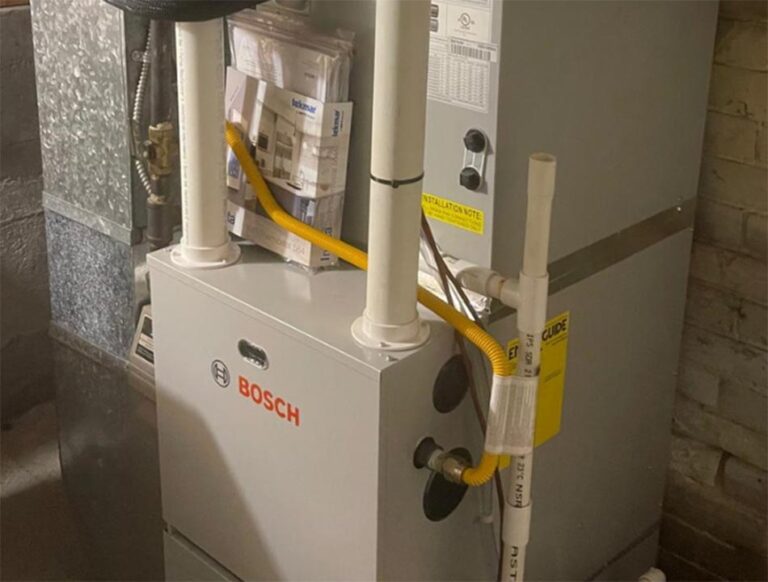
A Bosch or Buderus gas furnace burns natural gas to heat air, which a blower then pushes through ducts. The core components that fail are the igniter, flame sensor, gas valve, pressure switch and inducer motor. These are still common in older Lower Mainland homes and pair well with a heat pump in a dual-fuel setup, where the furnace provides backup heat during the coldest stretches.
Bosch Heat Pump
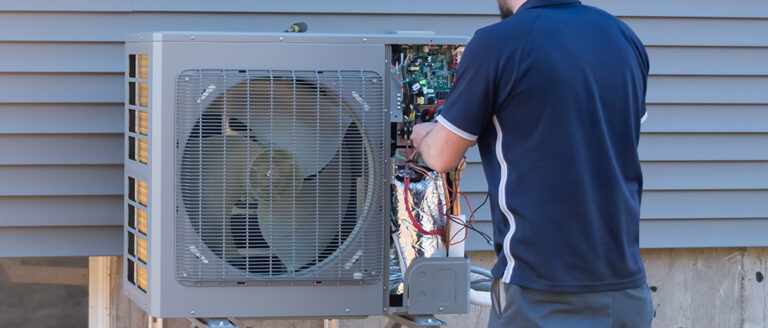
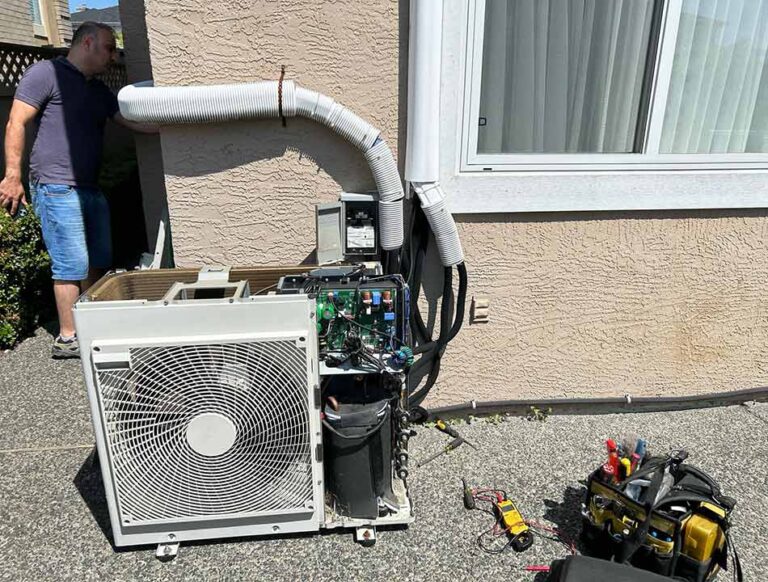
A Bosch heat pump moves heat rather than burning fuel, running in reverse in summer to provide cooling. The IDS Premium 2.0 and IDS Ultra are ducted, cold-climate rated units that hold capacity well below freezing, which suits the mild Vancouver climate. The Climate 5000 is a ductless mini-split for single rooms or additions. The same unit heats and cools, so it works year-round.
Bosch Air Conditioner
A Bosch central air conditioner cools only, using the same refrigerant cycle as a heat pump but without the reversing valve that allows heating. It shares failure modes with the cooling mode of a heat pump: refrigerant charge drift, condensate drain blockage, and capacitor or contactor wear are the usual culprits before the first hot week of summer.
Six Signs a Bosch HVAC System Has a Fault
Because inverter-driven equipment degrades gradually, the following patterns are worth noticing early. Each one describes a symptom and the most likely underlying cause.
A fault code on the controller
Bosch heat pumps and Climate 5000 mini-splits display fault codes on the indoor unit or outdoor display. A code most often points to a communication fault, a refrigerant pressure issue, or a sensor failure. The code narrows down the cause before anyone opens the unit.
Heat pump struggling below freezing
A cold-climate Bosch IDS heat pump should hold its rated capacity well below 0 degrees Celsius. Output that drops during a Vancouver cold snap usually indicates low refrigerant charge, a stuck reversing valve, or a defrost cycle that is not completing properly.
Outdoor unit running flat-out
An inverter compressor is designed to ramp up and down. A unit running constantly at full speed without modulating usually signals a control board fault, a drifting sensor reading, or a thermostat communication problem.
Mini-split dripping or gurgling
A Climate 5000 wall unit that drips water or makes a gurgling sound almost always has a clogged condensate drain. It is minor to fix early and expensive to fix after water has run down inside a wall.
Furnace short-cycling or no ignition
A Bosch furnace that lights and shuts off within a minute is short-cycling, usually a flame sensor or limit switch issue. No ignition at all points to the igniter, gas valve, or pressure switch.
Over 10 years old, no recent service
Bosch heat pumps can age faster in the marine climate of the Lower Mainland because salt-laden air corrodes the outdoor coil fins. Homes with more direct marine air exposure may see this sooner. A unit past 10 years that has not been serviced in 2 or more years is overdue for inspection.
If you smell gas, leave the building, call 911 from outside, and contact the FortisBC emergency line at 1-800-663-9911. If you suspect a refrigerant leak, indicated by an oily residue near the outdoor unit or a hissing sound, shut the system off at the breaker. Refrigerant work in BC is legally restricted to licensed technicians, so this is not a do-it-yourself repair.
Six Common Bosch HVAC Issues and What Causes Them
Bosch equipment is well-engineered, but inverter-driven HVAC has different failure modes than the older single-stage gear it replaces. These are the issues most often found on Bosch systems in the Lower Mainland, with an explanation of the mechanism behind each.
Communication faults
The indoor and outdoor units communicate over a low-voltage data line. A voltage drop, moisture in a connection, or a nicked conductor breaks that link and produces a communication fault code. The code looks alarming but is often resolved once the wiring is traced.
Inverter board failure
The inverter board on the outdoor unit does the hardest work in the system. Power surges, water ingress, and age all wear it out. A failed board typically produces no compressor activity at all and is the single most expensive non-warranty repair on a Bosch heat pump.
Refrigerant charge drift
Slow leaks at flare connections cause a gradual loss of capacity. Because the change is slow, homeowners often do not notice until the compressor has been overworking for months. Technicians measure superheat and subcooling against the Bosch specification to catch this.
Condensate drain blockage
Climate 5000 wall units route condensation through a small flexible drain that clogs easily with dust and biofilm. A blocked drain causes dripping indoors. Confirming the drain slope and clearing the line resolves it.
Capacitor and contactor wear
These two parts fail more than any others on cooling equipment. A capacitor reading well below its rated value is often recommended for replacement before it fails outright. Both are inexpensive and are the reason spring maintenance prevents mid-summer breakdowns.
Outdoor coil corrosion
Marine air in the Lower Mainland corrodes aluminum coil fins faster than the rated lifespan, and homes with more direct marine air exposure may see this sooner. Annual fin combing and a coil rinse can help extend outdoor unit life and preserve efficiency.
Repair or Replace a Bosch System: The 50 Percent Rule
Answer: If a written repair quote is more than 50 percent of replacement cost and the unit is over 10 to 12 years old, replacement usually gives better lifetime value. For a Bosch heat pump, a repair quote above roughly $4,500 on a 12-year-old unit is often replacement territory once rebates are factored in.
Confirm the age of the unit
Check the data plate or the original installation paperwork. Bosch heat pumps and air conditioners typically last 12 to 15 years in the marine climate. Bosch furnaces last 15 to 20 years with regular service.
Get a written, itemized repair quote
A verbal estimate is not enough to make the call. A written quote should list parts, labour, and any controls or refrigerant work separately so the true cost is clear.
Apply the 50 percent rule
Compare the repair quote to replacement cost. If the repair is more than half the cost of a new system and the unit is over 10 to 12 years old, replacement usually wins on lifetime value.
Factor in rebates and efficiency
Several BC programs can lower the cost of a replacement heat pump: the CleanBC Better Homes and Energy Savings programs, utility rebates through FortisBC and BC Hydro, and the federal Canada Greener Homes Loan, which offers up to $40,000 in interest-free financing. Income-qualified households can access the largest rebates, historically up to around $16,000 through the CleanBC Energy Savings Program. Program amounts and eligibility change regularly and the standard fuel-switching rebate for gas-heated homes ended in April 2025, so confirm current figures on the official program pages before relying on them.
How Often a Bosch System Should Be Serviced
Answer: A Bosch furnace should be serviced once a year before heating season. A Bosch heat pump should be serviced twice a year, before heating season and before cooling season, because the same unit runs year-round. Units older than 10 years benefit from yearly service regardless of how they seem to be running.
According to Technical Safety BC, annual professional inspection of gas-fired equipment is a foundational safety practice. For a heat pump, the twice-yearly schedule reflects the fact that the equipment does double duty: the same refrigerant circuit, compressor and coils handle both heating and cooling, so they accumulate roughly twice the runtime of a furnace. Regular maintenance on Bosch equipment focuses on measuring refrigerant charge, clearing condensate drains, checking capacitor and contactor readings, and combing and rinsing the outdoor coil, which is the component most exposed to the corrosive marine air of the Lower Mainland.
For related guidance, see our overviews of heat pump repair and installation, furnace repair in Vancouver, and current BC HVAC rebates.
Need a technician for your Bosch system?
If a fault code, a refrigerant issue, or an aging unit calls for a licensed professional, our team handles diagnosis, repair and installation across Metro Vancouver.
Bosch HVAC Questions, Answered
How do Bosch inverter-driven HVAC systems work?
A Bosch inverter-driven HVAC system varies compressor speed continuously instead of switching fully on and off. The inverter board adjusts the compressor to match the exact heating or cooling demand in the room, which keeps temperature steadier and reduces the hard start-stop cycling of older single-stage equipment. This applies to Bosch IDS Premium 2.0 and IDS Ultra heat pumps, Climate 5000 mini-splits, and Bosch inverter air conditioners.
What does a Bosch heat pump fault code mean?
A Bosch heat pump fault code is a diagnostic signal shown on the indoor controller or outdoor unit display that identifies a category of fault. The most common categories are communication errors between the indoor and outdoor units, refrigerant pressure faults, and temperature sensor failures. Exact code meanings vary by Bosch model, so the reliable step is to read the code from the unit and check it against the model-specific service manual. Write the exact code down before contacting a technician.
How often should a Bosch furnace or heat pump be serviced?
A Bosch furnace should be serviced once a year before the heating season. A Bosch heat pump should be serviced twice a year, once before heating season and once before cooling season, because the same unit handles both jobs year-round. According to Technical Safety BC, annual professional inspection of gas-fired equipment is a foundational safety practice. Bosch units older than 10 years benefit from yearly service regardless of how they appear to be running.
How long does a Bosch heat pump last in Vancouver?
A Bosch heat pump typically lasts 12 to 15 years in the Lower Mainland. The marine climate shortens outdoor unit life because salt-laden air corrodes aluminum coil fins faster than the rated lifespan, and homes with more direct marine air exposure may see this sooner. Bosch gas furnaces last longer, generally 15 to 20 years with regular service.
When should a Bosch HVAC system be repaired versus replaced?
A common guideline is the 50 percent rule: if a written repair quote is more than 50 percent of the cost of replacement and the unit is over 10 to 12 years old, replacement usually gives better lifetime value. For a Bosch heat pump, that means a repair quote over roughly $4,500 on a 12-year-old unit is often replacement territory. Available BC rebates can shift a borderline decision toward replacement.
Why is my Bosch mini-split dripping water?
A Bosch Climate 5000 mini-split that drips water indoors almost always has a clogged condensate drain. The wall unit routes condensation through a small flexible drain line that blocks easily with dust and biofilm. Clearing the drain early is a minor task, but water that runs down inside a wall can cause expensive damage, so the issue should be addressed promptly.
What rebates are available for Bosch heat pumps in BC?
Several programs may reduce the cost of a Bosch heat pump in BC: the CleanBC Better Homes and Energy Savings programs, utility rebates through FortisBC and BC Hydro, and the federal Canada Greener Homes Loan, which offers up to $40,000 in interest-free financing. Income-qualified households can access the largest rebates, historically up to around $16,000 through the CleanBC Energy Savings Program. An important change to note: the standard fuel-switching rebate for homes heated with gas, oil, or propane ended in April 2025, and that support has largely moved into the income-qualified stream. Rebate amounts and eligibility change frequently, so verify current figures on the official Better Homes BC and utility program pages before relying on them.