



The best cooling system for Vancouver homes depends on whether you have existing ductwork, which rooms actually need cooling, and whether the home is being designed with aging-in-place or accessibility in mind. This guide compares ductless mini-split systems against central air conditioning, with real 2026 Vancouver pricing, real SEER efficiency ratings, and a 5-step decision framework. Reviewed by Vanheat Services’ Red Seal certified technicians.
Content reviewed by Vanheat Services’ Red Seal certified HVAC technicians and Technical Safety BC licensed gas fitters. Last updated May 2026.

231 reviews



Best Cooling System for Vancouver Homes: Key Facts
- Best for ducted homes: Central AC ($10,000 to $14,000) or central heat pump ($14,000 to $20,000) reuses existing ductwork. Best for whole-home uniform cooling.
- Best for ductless homes: Single-zone mini-split ($4,500 to $7,500) or multi-zone mini-split ($9,000 to $25,000). Best when only 2 to 4 rooms need cooling.
- Energy efficiency: Top mini-splits hit SEER 22 to 30+. Typical central AC ranges SEER 14 to 20. Mini-splits typically save 30 to 50 percent on cooling bills compared to baseboard electric or window AC.
- Aging in place: Mini-splits work better for accessibility because of zoned operation, app/remote control, quieter indoor units (19 to 26 decibels), no dust circulation.
- Cold-climate option: Cold-climate mini-splits (Mitsubishi Hyper-Heat, Daikin Aurora) provide both summer cooling and primary winter heating, replacing baseboard or supplementing furnace heat.
- Rebates: Per CleanBC Better Homes, qualifying cold-climate heat pumps may receive up to $6,000 back. Per FortisBC, qualifying equipment receives up to $1,200. Per Canada Greener Homes Loan, up to $40,000 financed interest-free.
Why the Cooling System Choice Matters in Vancouver
Vancouver’s climate has shifted noticeably over the past decade. Summers that once reached 25 to 28 degrees Celsius for short stretches now regularly hit 30+ degrees for weeks, and heat dome events push temperatures into the 35 to 40 degree range every 2 to 3 years. According to Environment Canada, heat-related health risk in Metro Vancouver has tripled since 2010.
Choosing the right cooling system affects:
- Day-to-day comfort during heat events: undersized or wrong-type cooling fails first during the hottest days when it’s needed most.
- Energy bills: efficient cooling can run $30 to $80 per month during summer. Inefficient options hit $150+ per month and accelerate equipment wear.
- Indoor air quality: ducted systems circulate dust through the entire home; ductless mini-splits filter air at each indoor head.
- Long-term value and resale: energy-efficient cooling adds resale appeal in a market where buyers now expect AC, especially in detached homes.
- Aging-in-place adaptability: accessibility-friendly cooling allows seniors to stay independent in their homes longer, which matters as Vancouver’s population ages.
The two systems most Vancouver homeowners compare are ductless mini-split and central air conditioning. Both have legitimate strengths. The decision usually comes down to four factors: ductwork, room coverage, budget, and accessibility needs.
Mini-Split vs Central AC: Side-by-Side
Both systems deliver effective cooling. Each fits a different home type and lifestyle.
Ductless Mini-Split
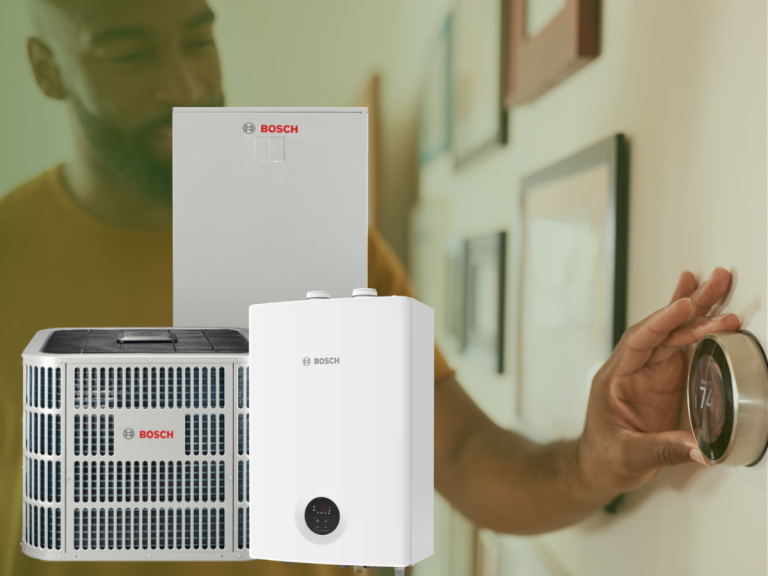
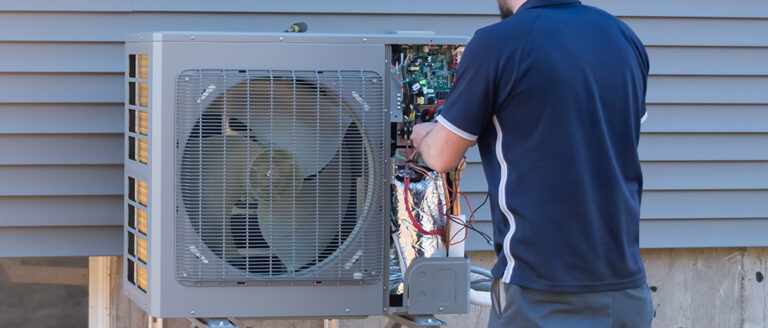
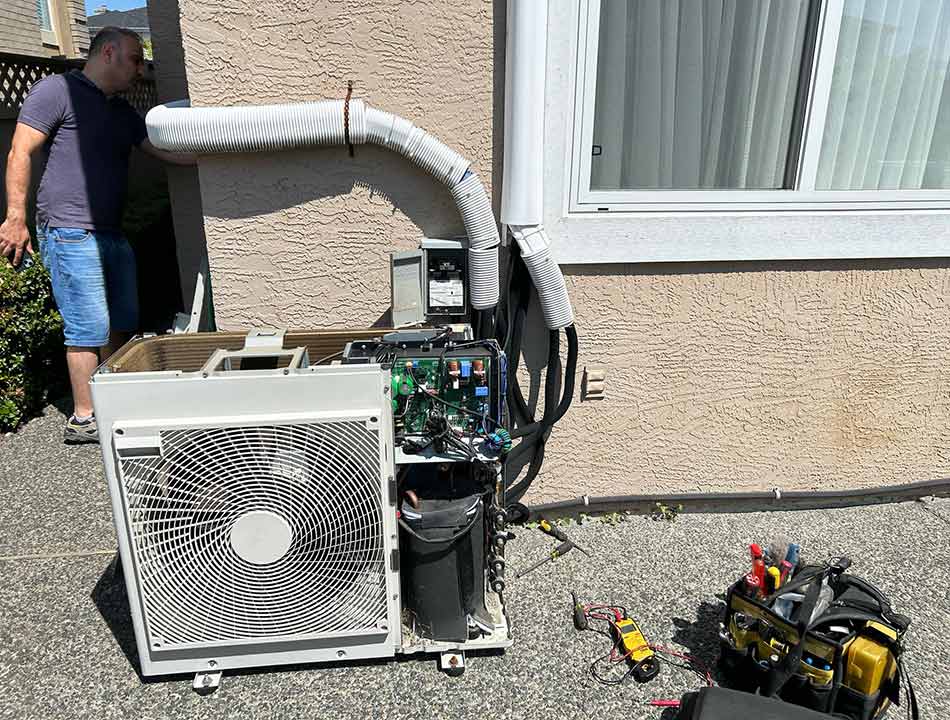
Outdoor compressor unit connected via small-diameter refrigerant lines to one or more wall, ceiling, or floor-mounted indoor heads. Each head cools its own zone independently.
Strengths:
- No ductwork required (perfect for older homes, additions, or condos)
- Zoned cooling: only cool rooms in use, save energy
- Higher SEER ratings (22 to 30+) than typical central AC
- Quieter indoor operation (19 to 26 decibels)
- Cold-climate models provide year-round heating + cooling from one system
- Single-day install possible for single-zone systems
Considerations:
- Indoor heads are visible (wall, ceiling cassette, or floor-mounted)
- Higher cost per square foot when whole-home coverage needed
- Multi-zone systems require more refrigerant line routing
Read the full ductless mini-split benefits guide for SEER specifics, real Vancouver pricing, and when mini-splits don’t fit.
Central Air Conditioning
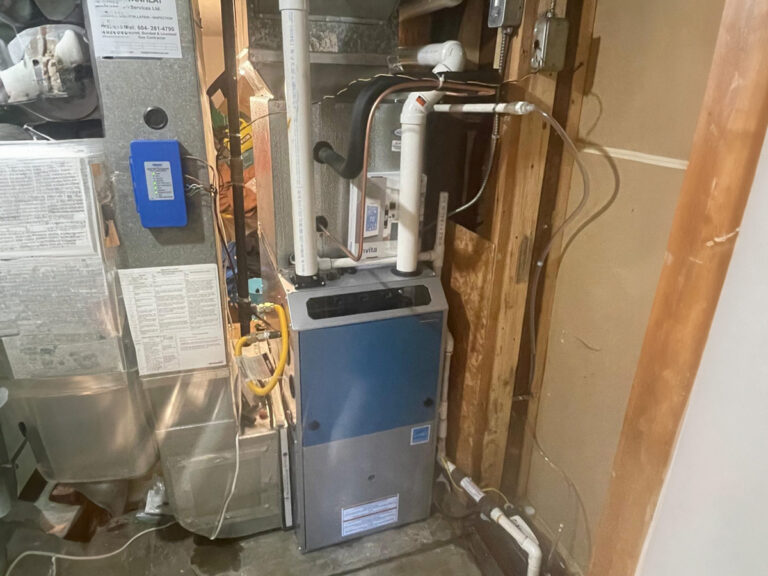
Single outdoor condenser unit connected to the existing furnace ductwork. A central thermostat controls the entire home from one location. Cooling distributed through existing supply registers.
Strengths:
- Uses existing ductwork with no new visible equipment indoors
- Single thermostat controls whole home
- Lower cost per square foot for whole-home coverage
- Centralized filtration upgrade option (MERV 11+ on the furnace return)
- Integrates with existing forced-air heating system
Considerations:
- Requires existing functional ductwork (retrofit costs $8,000 to $15,000+)
- Cools entire home even when only some rooms need it (energy waste)
- Lower typical SEER ratings (14 to 20) than top mini-splits
- Dust circulation through ducts affects indoor air quality
See central heat pump installation pricing if you want a single system that cools in summer and heats in winter using existing ducts.
When Each System Wins
Most Vancouver cooling decisions follow these scenarios.
| Scenario | Better fit | Why |
|---|---|---|
| 1950s to 1980s bungalow with baseboard heating | Mini-split | No ductwork; retrofit costs more than the cooling system itself |
| Newer detached home with gas furnace + ductwork | Central AC or central heat pump | Reuses existing ductwork; lower cost per square foot |
| Top floor of an older detached home gets too hot | Single-zone mini-split | Cool only the problem zone; preserves heating system as-is |
| Whole home overheats during heat dome events | Central heat pump or multi-zone mini-split | Whole-home coverage required, both work depending on duct status |
| Strata condo with electric baseboard | Mini-split (single-zone) | No ductwork option; outdoor unit footprint is strata-friendly |
| Suite or laneway home / addition | Mini-split | Independent zoning, no ductwork, fast install |
| Aging-in-place home renovation | Mini-split with smart thermostat | Zoned operation, app control, no dust circulation, quieter |
| Home office / single-room rental cooling | Mini-split (single-zone) | Lowest install cost, most energy-efficient for single-room use |
| Existing furnace + want fuel-switching for rebates | Central heat pump | Eligible for CleanBC up to $6,000 fuel-switch rebate |
Best Cooling System Pricing in Vancouver (2026)
Real installed pricing from Vanheat’s 2026 Vancouver-area projects. Equipment selection drives most of the variance.
Quick answer: Single-zone ductless mini-split installation $4,500 to $7,500. Multi-zone mini-split $9,000 to $25,000. Central AC $10,000 to $14,000. Central heat pump $14,000 to $20,000. Per the CleanBC Better Homes program, qualifying cold-climate heat pumps may receive up to $6,000 back, depending on eligibility. Per FortisBC, qualifying equipment receives up to $1,200 in rebates.
| System type | Vancouver installed price | Includes |
|---|---|---|
| Single-zone mini-split | $4,500 to $7,500 | 1 indoor head, outdoor unit, refrigerant line set, electrical, commissioning |
| Multi-zone mini-split (2 to 3 heads) | $9,000 to $15,000 | 2-3 indoor heads, single outdoor unit, line sets, electrical, commissioning |
| Multi-zone mini-split (4 to 5 heads) | $15,000 to $25,000 | 4-5 indoor heads, larger outdoor unit, multiple line sets, panel upgrade if needed |
| Central AC (cooling only) | $10,000 to $14,000 | Outdoor condenser, evaporator coil over furnace, refrigerant lines, electrical |
| Central heat pump | $14,000 to $20,000 | Cold-climate variable-capacity heat pump, refrigerant lines, electrical, ducted air handler if needed |
| Annual AC tune-up | $129 to $229 | 21-point inspection, filter check, refrigerant pressure, electrical, drain |
| Diagnostic visit | $149 | Combustion check, electrical, refrigerant. Credited toward repair if you proceed |
Pricing for Vancouver in 2026, GST included where applicable. Final price depends on equipment tier selected, electrical work required, and access difficulty.
A $14,000 central heat pump install with full CleanBC ($6,000) plus FortisBC ($1,000) rebates lands at $7,000 net cost, comparable to a single-zone mini-split, but covering the entire home and providing winter heating. Rebate eligibility depends on what equipment you’re replacing and program rules. Vanheat Services guides clients through rebate applications as part of qualifying installs.
Cooling Systems and Aging in Place
Vancouver’s population is aging. According to Statistics Canada, Metro Vancouver residents aged 65+ grew 30+ percent over the past decade, and many are choosing to age in place rather than relocate. Cooling system selection affects whether the home stays comfortable and accessible.
For aging-in-place planning, ductless mini-split systems typically have the edge because of these features:
Zoned operation reduces energy waste
A senior who spends most of the day in 2 or 3 rooms doesn’t need to cool the entire house. Multi-zone mini-splits cool only the rooms in use, which often cuts cooling bills 30 to 50 percent compared to whole-home central AC. Lower bills matter on fixed retirement income.
App and remote control without bending or reaching
Most modern mini-splits come with smartphone app control and remote controls. Settings can be adjusted from a chair without standing up to reach a wall thermostat. Voice control through Alexa, Google Home, or Siri is increasingly standard.
Quieter indoor operation
Mini-split indoor heads typically run 19 to 26 decibels (about library-quiet). Central AC supply registers can produce noticeable airflow noise, especially with older or undersized ductwork. Quieter operation improves sleep quality, which matters for older adults.
No dust circulation through the home
Ducted systems circulate dust, pollen, and allergens through every room every time the system runs. Mini-splits filter air at each indoor head, with no shared ductwork. This matters for residents with respiratory conditions, asthma, or compromised immune systems.
Single-day install minimizes disruption
Single-zone mini-split installations typically complete in 4 to 6 hours. Central AC retrofits in homes without existing ductwork can take 1 to 2 weeks of construction. For a senior already living in the home, a single-day install is far less disruptive.
For caregivers helping an aging parent select a cooling system, the typical recommendation is a single-zone or 2-zone mini-split covering the bedroom and living room, with smart thermostat integration. Total install runs $5,000 to $11,000 in Vancouver, often eligible for partial CleanBC rebate if it replaces baseboard electric heating.
Ready for a Cooling System Quote?
In-home assessment with itemized quote in 24 hours. 2 to 3 equipment options compared with rebate amounts factored in. No-obligation, no pressure to sign on the first visit. Red Seal certified, Technical Safety BC licensed gas fitters.
How to Choose the Best Cooling System for a Vancouver Home
A 5-step framework that gets most Vancouver homeowners to the right cooling system answer in about 30 minutes of thinking.
Check for existing ductwork
If you have a ducted forced-air gas furnace, central AC or central heat pump that uses the existing ducts is typically the most cost-effective path. If you have baseboard electric, a boiler with radiators, or no central heating at all, the home does not have ductwork. Retrofit ductwork costs $8,000 to $15,000+ and requires opening walls and ceilings, usually more than the mini-split system itself.
Identify which rooms actually need cooling
Walk through the home and note which rooms get hottest. South-facing bedrooms, top-floor offices, and west-facing living rooms often need cooling more urgently than other rooms. If only 2 to 4 rooms need cooling, a multi-zone mini-split typically beats whole-home central AC on cost and efficiency. If the entire home needs uniform cooling, central wins.
Evaluate accessibility and aging-in-place needs
If the home is being designed for aging in place or has accessibility considerations, mini-splits offer zoned operation, remote/app control, quieter indoor operation (19 to 26 decibels), and no dust circulation through ductwork. Smart thermostats reduce the need to bend or reach to adjust settings.
Calculate rebate eligibility
Per the CleanBC Better Homes program, qualifying cold-climate heat pumps that fuel-switch from fossil fuel heating may receive up to $6,000 back, depending on eligibility. Per FortisBC, qualifying equipment receives up to $1,200 in rebates. Per the Canada Greener Homes Loan, qualifying installations can be financed with up to $40,000 interest-free. The rebate often makes the high-efficiency option cheaper than the standard option after rebates apply.
Get an in-home assessment with itemized quote
Book a Red Seal certified technician for an in-home assessment. The assessment confirms ductwork condition (if applicable), measures the home for proper sizing (Manual J load calculation), identifies installation considerations (electrical capacity, refrigerant line routing, condensate drainage), and provides 2 to 3 equipment options with rebate amounts factored in. Itemized written quote within 24 hours, no pressure to sign.
Best Cooling System for Vancouver Homes: Common Questions
What is the best cooling system for Vancouver homes?
The best cooling system for Vancouver homes depends on whether you have existing ductwork. For homes with ducted forced-air heating, a central air conditioner or central heat pump that uses the existing ducts is typically the best fit. For homes without ductwork (older bungalows, baseboard-heated homes, condos), a ductless mini-split is the better choice because retrofit ductwork costs $8,000 to $15,000+ and disrupts walls and ceilings. Most Vancouver homes built before 1980 do not have central ductwork.
How much does a cooling system cost in Vancouver?
Single-zone ductless mini-split installation in Vancouver runs $4,500 to $7,500. Multi-zone mini-split (2 to 5 indoor heads) runs $9,000 to $25,000. Central AC installation in homes with existing ductwork runs $10,000 to $14,000. Central heat pump installation runs $14,000 to $20,000. Per the CleanBC Better Homes program, qualifying cold-climate heat pumps may receive up to $6,000 back, depending on eligibility. Per FortisBC, qualifying high-efficiency heat pumps receive up to $1,200 in equipment rebates.
Is a mini-split or central AC better for energy efficiency?
Mini-splits are typically more energy-efficient than central AC for two reasons: zoned cooling (you can cool just the rooms in use rather than the entire home) and higher SEER ratings on the equipment itself. Top mini-splits hit SEER 22 to 30+, while typical central AC ranges SEER 14 to 20. According to Natural Resources Canada, a high-efficiency mini-split can reduce summer cooling costs 30 to 50 percent compared to baseboard electric or window AC. Central AC wins when the entire home needs uniform cooling at the same time.
Which cooling system is best for aging in place?
For aging in place or accessibility-focused homes, a ductless mini-split system is typically the better choice. Reasons: zoned cooling means a senior can cool just the bedroom or living room without paying to cool an empty home, smart thermostats and remote controls allow operation without bending or reaching, no walking on uneven outdoor surfaces to access controls, and quieter operation (most mini-splits run 19 to 26 decibels indoors). Mini-splits also avoid the dust circulation that ducted systems create, which matters for respiratory conditions.
How long does a cooling system installation take in Vancouver?
Single-zone mini-split installation typically takes 4 to 6 hours and is often done in one day. Multi-zone mini-split installation (2 to 5 indoor heads) runs 1 to 2 days depending on complexity. Central AC installation in a home with existing ductwork takes 1 to 2 days. Central heat pump installation runs 2 to 3 days because of additional electrical work and refrigerant line runs. Vanheat schedules installations 1 to 3 weeks out during peak season (May to August) and within 1 week during shoulder seasons.
Do mini-splits work in Vancouver winters?
Yes. Cold-climate mini-split heat pumps work effectively in Vancouver winters because Vancouver winters rarely drop below minus 10 degrees Celsius. Modern cold-climate mini-splits (Mitsubishi Hyper-Heat, Daikin Aurora, Fujitsu Halcyon XLTH) maintain rated heating capacity down to minus 15 degrees, with reduced output to minus 25 degrees. For Vancouver’s coastal climate, a cold-climate mini-split provides both summer cooling and primary winter heating from one system, often replacing baseboard electric or supplementing an existing furnace.
What rebates apply to cooling system installations in Vancouver?
Three rebate paths apply. Per the CleanBC Better Homes program, qualifying cold-climate heat pumps that fuel-switch from fossil fuel heating may receive up to $6,000 back, depending on eligibility. Per FortisBC, qualifying high-efficiency heat pumps and central AC equipment receive up to $1,200 in equipment rebates. Per the Canada Greener Homes Loan, qualifying installations can be financed with up to $40,000 interest-free over 10 years. Vanheat Services guides clients through rebate applications as part of qualifying installs.
Get a Cooling System Assessment
$149 diagnostic, fully credited toward repair. Red Seal certified, Technical Safety BC licensed gas fitters. 4.9 stars, 231 Google reviews. Serving Vancouver and the Lower Mainland since 2008.